Murder Is Simple: It Is Conflict Resolution for the Offender
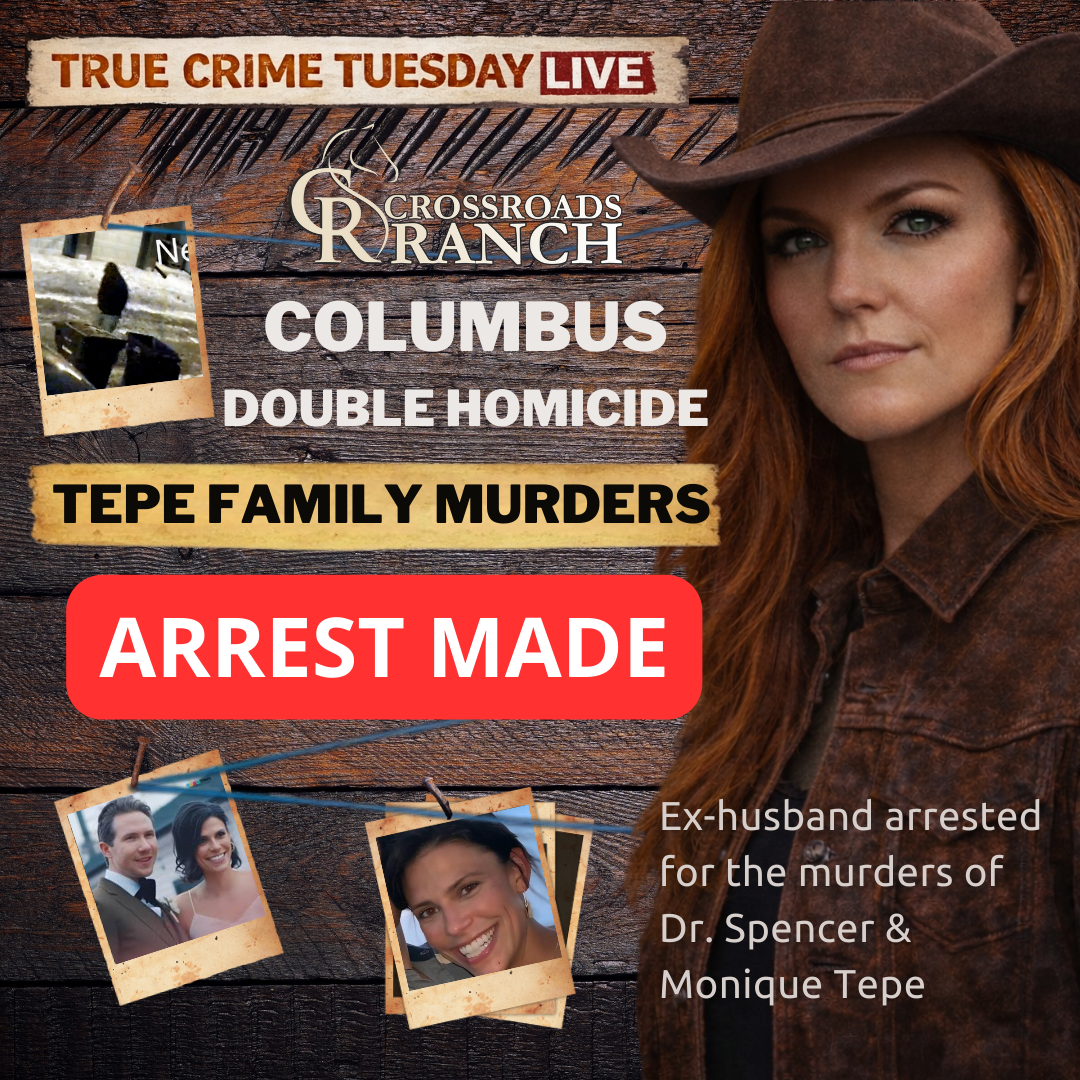
Click to watch Doc on Criminally Obsessed with Anne Emerson
What the Tepe Case Reminds Us About How Homicide Really Works
Murder is often portrayed as chaotic, impulsive, or incomprehensible. It is framed as evil, madness, or something so complex it defies understanding.
For me, in reality, murder is simple.
Murder is conflict resolution for the offender.
That does not mean it is morally simple. It means it is behaviorally simple. The offender is faced with a conflict they cannot tolerate, cannot control, cannot escape, or cannot resolve through lawful or social means. Murder becomes their chosen solution.
The recent arrest in the Tepe case could be a clear example of this principle at work in my opinion.
Targeted Violence Is Not Random Violence
From the beginning, this case has shown indicators of targeted violence. Targeted violence means the suspect knew exactly who needed to be harmed to resolve the conflict they were experiencing. Remember how murder happens in many cases: TRIGGER>EMOTION>THOUGHT>BEHAVIOR.
Random violence is opportunistic. Targeted violence is personal. To me this case is very personal.
The victims were not interchangeable. They were specific to the suspect. That specificity matters because it tells us something critical about motive, offender decision making, and victim-offender relationship dynamics.
When violence is targeted, an offender is not acting out of chaos. He or she are acting out of perceived necessity.
Conflict Does Not Disappear. It Escalates. Especially in Intimate Partner Homicide Cases
One of the most common investigative errors is assuming that the absence of visible conflict means there is no conflict. In reality, unresolved conflict often goes underground. It becomes internalized, simmering, and increasingly dangerous. Conflict can take many forms:
Loss of control
Perceived rejection or humiliation
Threats to identity, power, or status
Financial disputes
Custody or relationship dissolution
Narrative collapse where the offender’s story about themselves no longer holds
Generally speaking, when an offender lacks healthy conflict resolution skills, lacks emotional regulation, and lacks empathy for the victim, violence becomes a tool. Not an accident, especially not a staged one lol. Not a snap decision…A tool.
Why Victimology Comes First: LPA’s Policy—Victimology in the First 48
The fastest way to understand homicide is to start with the victim, not the weapon, not the crime scene. Victimology asks the most important question at the scene: Who was in conflict with this person That question immediately narrows the universe of possibilities. It forces investigators to look at relationships, power dynamics, history, and motive pathways rather than chasing hypotheticals. One way we advocate for investigators to get a firm handle on a case from the onset is by using Pettler’s Staging Trilogy helps investigators identify the potential for staging at a crime scene by asking three questions upon arrival: Who is in conflict with the victim? Who discovered the victim missing, injured, or dead? Who reported missing, injured or dead to to 911?
In the Tepe case, for me, the victimology pointed toward relational conflict. That is not in hindsight, it was in foresight because we use the Murder Room Method. It is pattern recognition. I now suspect the TRIGGER will emerge from the publicly released data: argument-conflict, custody, child support, rage, something…we don’t know yet. Regardless, intimate partner homicides and family annihilation cases follow consistent behavioral pathways. The victims and offenders change for me. Their scripts rarely do. I’ve been working in homicide for 25 years as of this year in fact. Time flies.
Murder Is a Decision, Not an Accident
Offenders do not wake up one morning and randomly decide to kill. The decision is preceded by:
Escalating grievance
Perceived loss of control
Rigid thinking
Emotional narrowing
Dehumanization of the victim
A belief that violence will “solve” the problem
From an offender’s perspective, murder restores control. It ends the conflict permanently. It silences the perceived threat. In this case I think it might have helped the suspect resolve his or her anger. That is why murder feels final to an offender, but also why it feels shocking to everyone else.
Why Methodology Matters
Methodology keeps investigators grounded in evidence rather than emotion. My friend Doug Young and I were talking this week. He is teaching a class at in VA this week that forces investigators to justify and explain their methodology. Many investigators don’t use a method at all. And here’s the thing, when investigations focus only on physical evidence, behavioral evidence can be overlooked. When investigations focus only on timelines, motive can get blurred. When investigators chase theories instead of patterns, cases stall and often go cold right before their eyes.
A victim centered, behaviorally grounded methodology allows investigators to:
Identify conflict early
Recognize targeted violence
Narrow suspect pools faster
Build probable cause sooner
This is not about shortcuts. It is about precision. A firearm did not walk to the Tepe’s house and shoot them…a person did. Behavior did. Without behavior you don’t have murder.
Accountability Without Celebration
An arrest is not a victory in my opinion. It is a step toward accountability. The purpose of homicide analysis is not prediction for its own sake. It is truth seeking. It is justice. Answers for families. It is honoring victims by understanding what happened to them accurately and ethically. Monique and Spencer Tepe mattered long before their names appeared in headlines. They are not symbols of people’s worst nightmares getting murdered in the middle of the night. They were people. I think the warrant was clear that establishing probable cause for arrest was the priority, now all the rest of the work follows. This has been my experience time and time again having learned “how to prosecute” murder cases from one of the best career domestic violence homicide prosecutors in history. I’ve taught many classes on solving and working DVH cases. I chose this area as my specially about 20 years ago and have learned a lot along my way. Victims have always taught me the most.
The Takeaway
Murder is not mysterious. It is most often not random. It is not unknowable in most cases. Statistics prove that. Murder is conflict resolution for the offender, most of the time. Can you have a random homicide for no reason? Yes of course. But is it likely to happen between the specific hours of 0200-0500 hours EST in a specific house against two specific people leaving two children unharmed? Those variables do not say “random.” When investigators understand the victim first, they stop asking the wrong questions at the jump. They stop chasing white noise and going down rabbit holes. They start seeing patterns where others see chaos. That’s what method does for us. And when a method is sound, truth does not require hindsight.
And remember, every trail leads to the truth. Ride on!