LANCASTER COUNTY, SC, CORONER’S OFFICE
MOUNTED RESPONSE UNIT
Mission
“It’s our duty to provide thorough investigations. It’s our honor to do so with pride and integrity.”
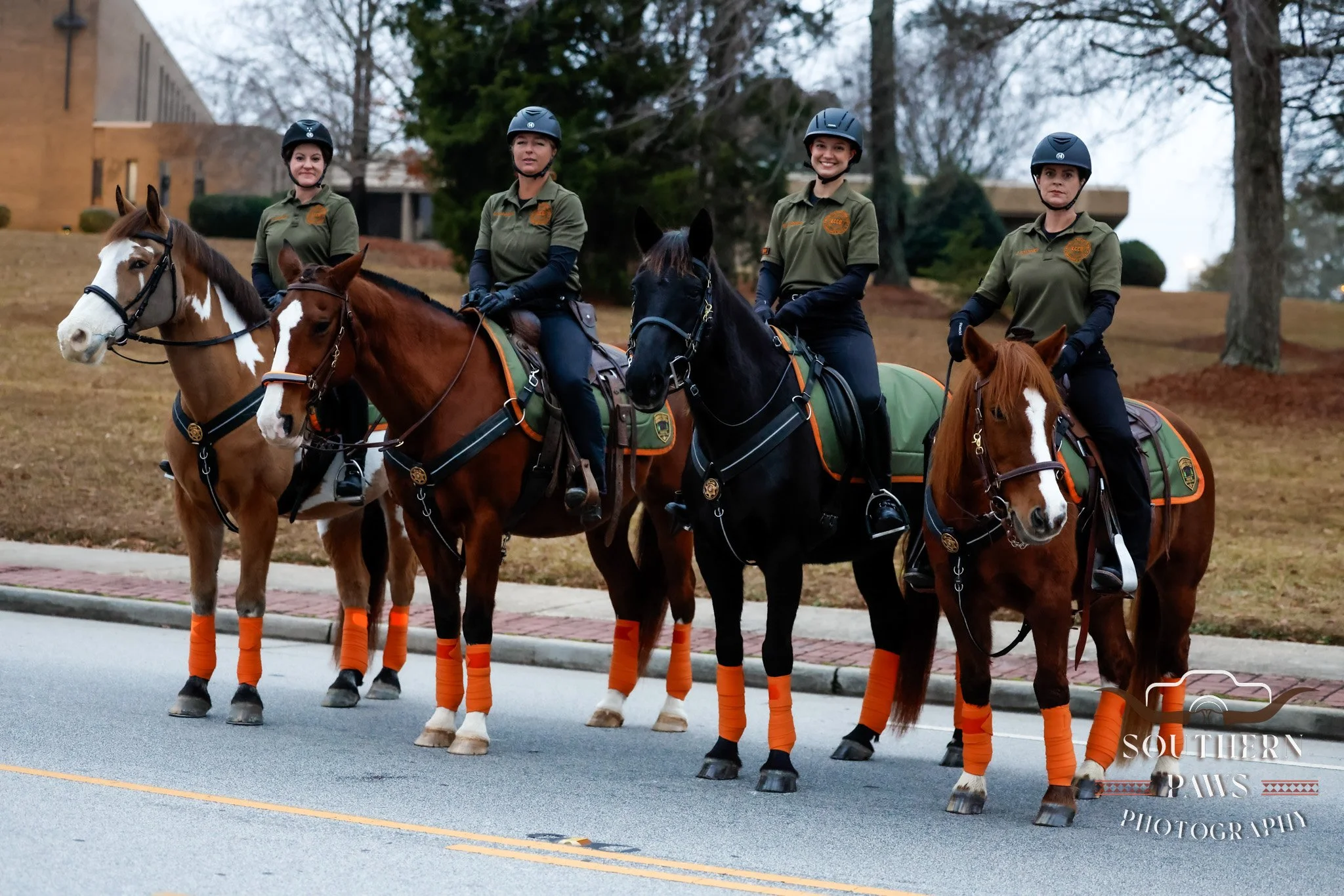
The Lancaster County Coroner's Office Mounted Response Unit is committed to serving our community with integrity, compassion, and dedication. Our mission is to provide exceptional search, rescue, recovery, and item location services while conducting thorough medico-legal death investigations by the Coroner’s Office. We honor the bond between humans and horses by repurposing horses once deemed forsaken, transforming them into valuable partners in public safety.
We strive to foster a culture of outreach and support, engaging with veterans, survivors of domestic violence, educational institutions, nursing homes, and community events. Together, we aim to uplift and empower the people of Lancaster County, ensuring their safety and well-being. Through our unwavering commitment to service, we seek to inspire hope, forge connections, and create a legacy of compassion for all.
Second in command is renowned Georgia-based crime scene investigator, Law Enforcement Hall of Fame member, author, and Emmy winner, Sheryl “Mac” McCollum, founder of the Cold Case Investigative Research Institute and its Wildlife CSI Academy, author of Cold Case: Pathways to Justice and Swans Don’t Swim in a Sewer, who brings incredible expertise and who will serve as the MRU Deputy Coroner Assistant Commander focused on ground command. “It was an honor to serve as Director for the Crisis Response Team for the Atlanta Olympic Games Bombing, the 9-11 Crisis Response Team at the Pentagon, and now the citizens of Lancaster County as part of Coroner Deese’s MRU.” said McCollum.
Crossroads Ranch Operations Manager Todd Ellis serves as the MRU’s Deputy Coroner Director of Equine Management, “As Crossroads’ Operations Manager, it’s my job to make sure the horses are well cared for and our grounds and structures are well maintained. I look forward to bringing those skills to the MRU to help others. I am honored to serve.”
Leadership also includes lifelong horsewoman and veteran death case analyst Alexis Pettler, who serves as the MRU’s Deputy Coroner Director of Logistics. “I am honored to work with this incredible team under the leadership of Coroner Deese. My focus and passion has always been helping the community and those around me and this position gives me the opportunity to utilize both my death investigation and horsemanship skills.”
First coroner’s mounted unit in the United States.
The LCCO MRU was founded by Coroner Karla Deese of the Lancaster County, SC Coroner’s Office. The unit was sworn in as the first coroner’s mounted unit in the United States on January 17, 2025.
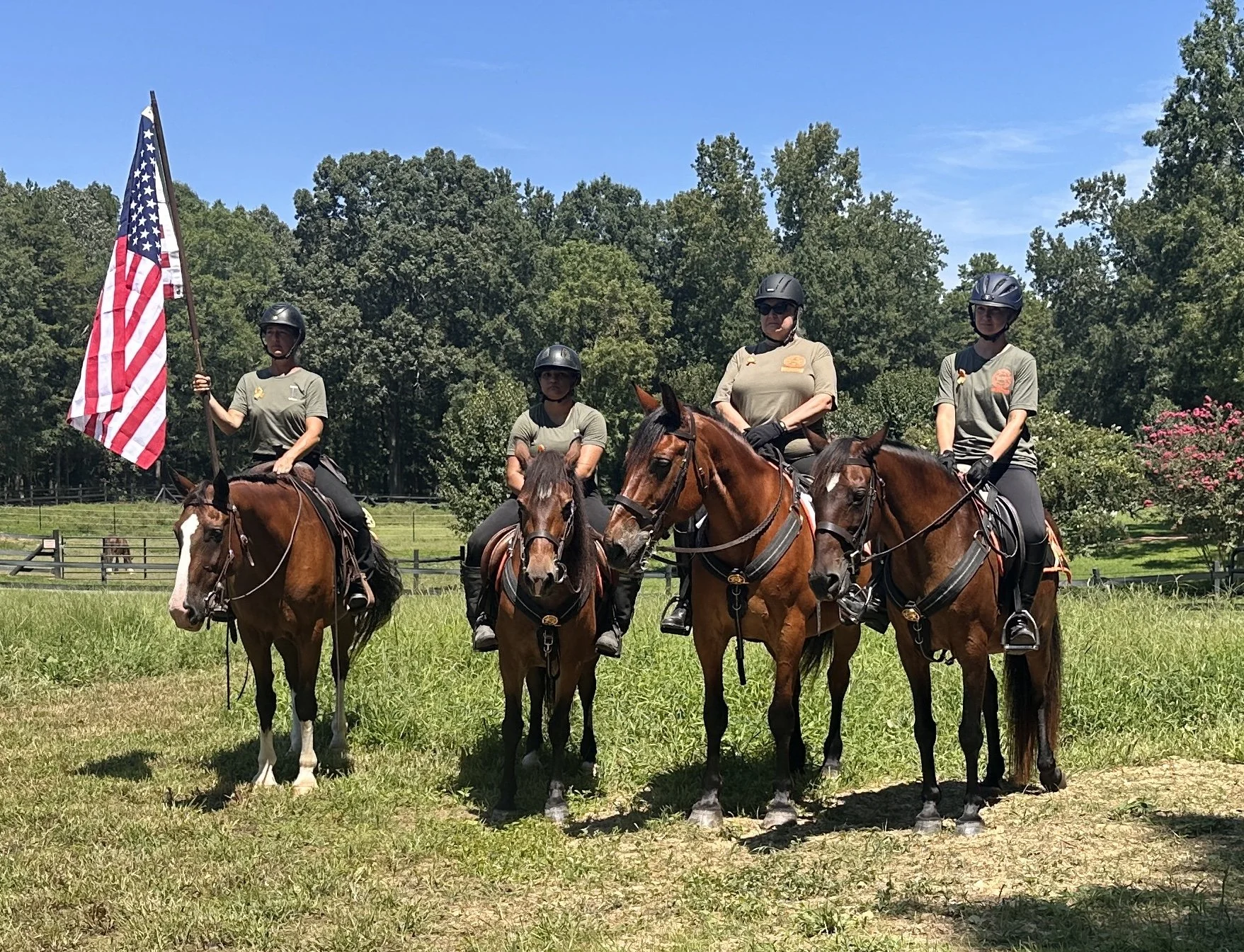
The LCCO MRU is made up of both mounted and ground-based sworn and civilian volunteers, some with decades of experience in death investigation, law enforcement, and crime scene work.
The LCCO MRU is under the command of lifelong horsewoman and renowned homicide expert, forensic criminologist Deputy Coroner Commander Dr. Laura Pettler. “For me, the MRU is the ultimate culmination of both my passions rolled into one: horses and helping people, and as its Commander, it is my duty and one of the greatest honors of my life to serve Coroner Deese and her administration, the People of Lancaster County and South Carolina.” Pettler said.
MRU Volunteers mock search practicing formation search pattern.
-
Who Can Join as a Mounted Volunteer
We’re always excited to welcome dedicated people with diverse skill sets into the unit. Mounted Search and Rescue requires solid riding skills and the physical ability to handle real-world search conditions. If you have several years of consistent horsemanship or are an accomplished rider or trainer, we’d love to meet you. You’ll need to demonstrate walk, trot, canter, rein back, and basic lateral work, and be able to participate safely. If that’s you, we encourage you to apply.
If You’re Still Building Your Riding Skills
Newer riders are absolutely welcome here. You can begin by volunteering in our Equine Management Division, which is a great way to learn, contribute, and get comfortable with the unit. If your long-term goal is to ride with us, Honeysuckle’s Ranch Academy offers lessons with MSAR Dominique Morrison, who has designed a path specifically for future MRU riders.
Leasing an MRU Horse
For riders who don’t have a horse of their own, Honeysuckle’s Ranch Academy offers well-trained MRU horses for lease. Approved riders may treat their leased horse as their own—ride regularly, take them to clinics, enjoy trail rides, and even show with Coroner approval. Our goal is to help you develop a real partnership with a horse while supporting the mission.
Understanding Rider Responsibilities
Honeysuckle’s Ranch Academy is proud to make horses available, but all mounted volunteers are responsible for the cost of their own personal horse or their leased horse. This keeps the program healthy and fair for everyone. Lease fees are discounted 50% for approved riders, and we’re here to guide you through every step of choosing the right mount.
-
What to Expect from Mounted Training
In our inaugural year, our mounted response unit trained to the nationally recognized standard of the ASTM minimum MSAR guidelines for mounted search and rescue responder units. Our goal was to build awareness of the basics required to build a deployable unit that is keeps the safety of the public, people, horses, the coroner, the agency, and the county in mind. To ensure every rider and horse is a safe, self-sufficient, and deployable resource during missing-person operations, we adopted the ASTM guidelines for basic horsemanship testing. Members are not required to purchase equipment, but we provide NASAR’s recommended equipment lists for members who opt to invest in specific equipment.
Our 2025 system was a multi-model hybrid model of online and in-person classroom and mounted training. On the human side, our team attends in-person classroom crime-scene recognition instruction, item marking, and proper chain of custody because mounted responders often locate items or the subject first. Any search can become a criminal investigation in seconds. Our dual-track training protects scenes, preserves items that could be evidence, and ensures that when the coroner and law enforcement arrive, the integrity of their investigations are intact and our team is an asset, not a liability.
Our mounted trainings are structured, supportive, and designed to help you and your horse become a strong team. Towards the end of 2025, we began practicing real-life skills in uniform and with equipment so we started to become familiar and ready to go when needed. Per the Coroner’s 2025 accepted SOP, riders are expected to attend at least half of the mounted, online/classroom sessions each year. Mounted search and rescue responder rides aren’t trail rides they’re purposeful, often life or death, multi-agency responses, which require regular mock-deployment training missions that prepare us for real search work.
What We Practice Together
We train everything from relaxation and communication to obstacle work, formations, patterns, and practical search skills for both horses and people. We also work on trailer loading and handling unexpected situations. Every session is designed to build confidence and capability for both horse and rider. As mentioned above, we train in mock call out scenarios to help horses and riders learn to work together under pressure safely.
Turnout Standards
Turnout is part of our professionalism. Horses should arrive clean and ready, tack should be safe and in good repair, and riders should come in uniform, which helps us get in good practice. If something needs attention, we’ll help you take care of it. We always make time to connect afterward during our Potluck Hour days. All horses that are vaccinated, current Coggins are welcome.
Online Learning Nights
In 2025, we met online once a month for a two-hour virtual training to build awareness of NASAR’s recommended search tactics, along with crime-scene protocol, equine care, and unit standards. It’s a supportive, accessible way to stay connected and keep learning.
See above to register for training using our Google Form.
-
How Our Ranking System Works
Our ranking structure gives volunteers a clear, encouraging pathway for growth. Everyone begins as a trainee and moves forward as they complete trainings, strengthen their skills, and gain experience. It’s a rewarding progression, and we support you every step of the way.
What It Takes to Become Certified
To earn the title of Certified Mounted Search and Rescue responder volunteer (C-MSAR), riders complete a series of tests based on the ASTM nationally accepted minimum guidelines for mounted search and rescue responder training, quizzes, and training experiences, including a mock search and Assistant Commander McCollum’s crime scene class. Our 2025 internal LCCO MRU certification system was built by Commander Pettler to map, track, and document horse and rider team readiness to protect the public, people, horses, the coroner, the county, and maintain the integrity of the investigations. Horses and riders certify together. We celebrate every milestone you reach.
Our Certification Tests
Our certification tests are designed to build skills and confidence, not pressure as recommended by the ASTM Minimum Guidelines for volunteer Mounted Search and Rescue responder units.
• Safe trailer loading and unloading
• Basic Ten Riding Skills (gaits, control, and lateral work)
• Search patterns, formations, and drill
• Timed obstacle course
We teach and practice each skill before testing, and we’re there to support you throughout.In addition to these four tests, online quizzes, classroom attendance, and mock mission participation was required.
Six volunteers completed the 2025 program and on November 22, 2025, they were awarded the designation of CSMAR designation within the unit.
Stay tuned for updates to our 2026 Training Program Schedule…
-
Ground Support—A Vital Part of the Team
Riding isn’t the only way to serve. Ground volunteers in our Equine Management Division play essential roles in grooming, tacking, equipment management, assisting vets and farriers, preparing horses for events, and supporting the team during deployments. These volunteers keep the entire operation running smoothly.
Community Outreach
Community engagement is a big part of our mission. We are planning to visit schools, nursing homes, survivor support groups, recovery programs, and events for veterans, EMS, law enforcement, and first responders. These outreach events make a real impact, and volunteers of all levels are welcome to help.
MRU Explorers Program (Ages 14–18)
Our Explorers Program, led by Deputy Coroner Director of Logistics Alexis Pettler, offers teens a structured, meaningful way to get involved. Explorers do not ride or deploy but participate in community outreach, education, and special projects. Chair: Charlie Evosevich. In 2026, MSAR Dominique Morrison is launching a new program for kids and adults who want to pursue volunteer work or careers in equine-assisted public service and/or safety. More to come on that soon.
-
How to Apply
We learned last year that the best way to start out is by attending two mounted trainings as an observer to get a feel for the unit. Then discuss with Coroner Deese your interest in applying to join the unit. If you are a riding member, you must provide your own horse and all your own equipment, or lease a horse/equipment, or get a free horse from someone you know, etc. Honeysuckle provides horses leases, but they do not provide free horses, equipment, or free riding for MRU members. Every member pays for their own horse and expenses because we are a volunteer unit.
Once Coroner Deese approves you for application, she will provide you with a SLED background check form and application link. Complete it with a Notary, submit it with your application, along with a photo of your driver’s license. After everything is submitted, the Coroner’s Office will notify you once your SLED background check is complete. We’re always here to answer questions and help you through the steps. Final membership approval is required from Coroner Deese.
To inquire about attending a monthly training, please Coroner Deese.
LCCO MRU Calendar of Events
Media
Press Releases:
Media:
Lancaster County has possibly the nation's first mounted response unit
Coroner's Office to start country's first mounted response unit
What's a coroner horse? Lancaster office saddles up with new equestrian rescue unit
SC Coroner launches first-in-nation horse search unit for difficult terrain rescues
Union County horses part of country's first coroner's mounted response unit
SC coroner starts first-in-nation unit for difficult searches. It’s old school — horses
Contact the MRU
Make an impact today
Support our mission by contributing a donation.
All Donations are made directly to the Lancaster County Coroner’s Office and must be specifically stated to be designated for the Mounted Response Unit.
Venmo All donations much be specifically marked by the donor to designate to the MOUNTED RESPONSE UNIT.
Checks can be made out to the Lancaster County Coroner’s Office. On the check in the “memo” space please write “Designated for the MRU”and mailed to Coroner Karla Deese, LCCO, 717 South Main Street, Lancaster, SC 29720.

MSAR Educational Resources
Education, training, and experience is critical to success of everything we do. Saving lives and helping families reunite is some of the most important work in the world. Knowing what you’re doing as a MSAR helps you find more victims and helps keep you safe while searching. Mounted Search and Rescue is no different. The National Association for Search and Rescue offers tremendous opportunities for education, training, and experience. Joining NASAR is not required by the LCCO MRU, but is encouraged.
Online Courses
Mounted Search and Rescue Certification III - LCCO MRU has the course materials for this course members are welcome to borrow to complete this certification
FREE: Lost Person Behavior and ISRID
Crime Scene Preservation, Protocol, and Evidence Awareness
FEMA Emergency Management Institute:
IS-100.C: Introduction to the Incident Command System, ICS 100 (this is a prerec for the SAR Academy’s Mounted Search and Rescue Certification III)
Books:
Crime Scene Investigation: A Guide for Law Enforcement (this is the text for the SAR Academy’s Crime Scene Preservation, Protocol, and Evidence Awareness)
Available in the NASAR Store
Fundamentals of SAR (FUNSAR) Textbook (this is a prerec for the SAR Academy’s Mounted Search and Rescue Certification III)
Analysis Of Lost Person Behavior
Links:
EBOOKS:
MRU Documents
MRU Help Guides
Resources