

The Horse Just Spooked
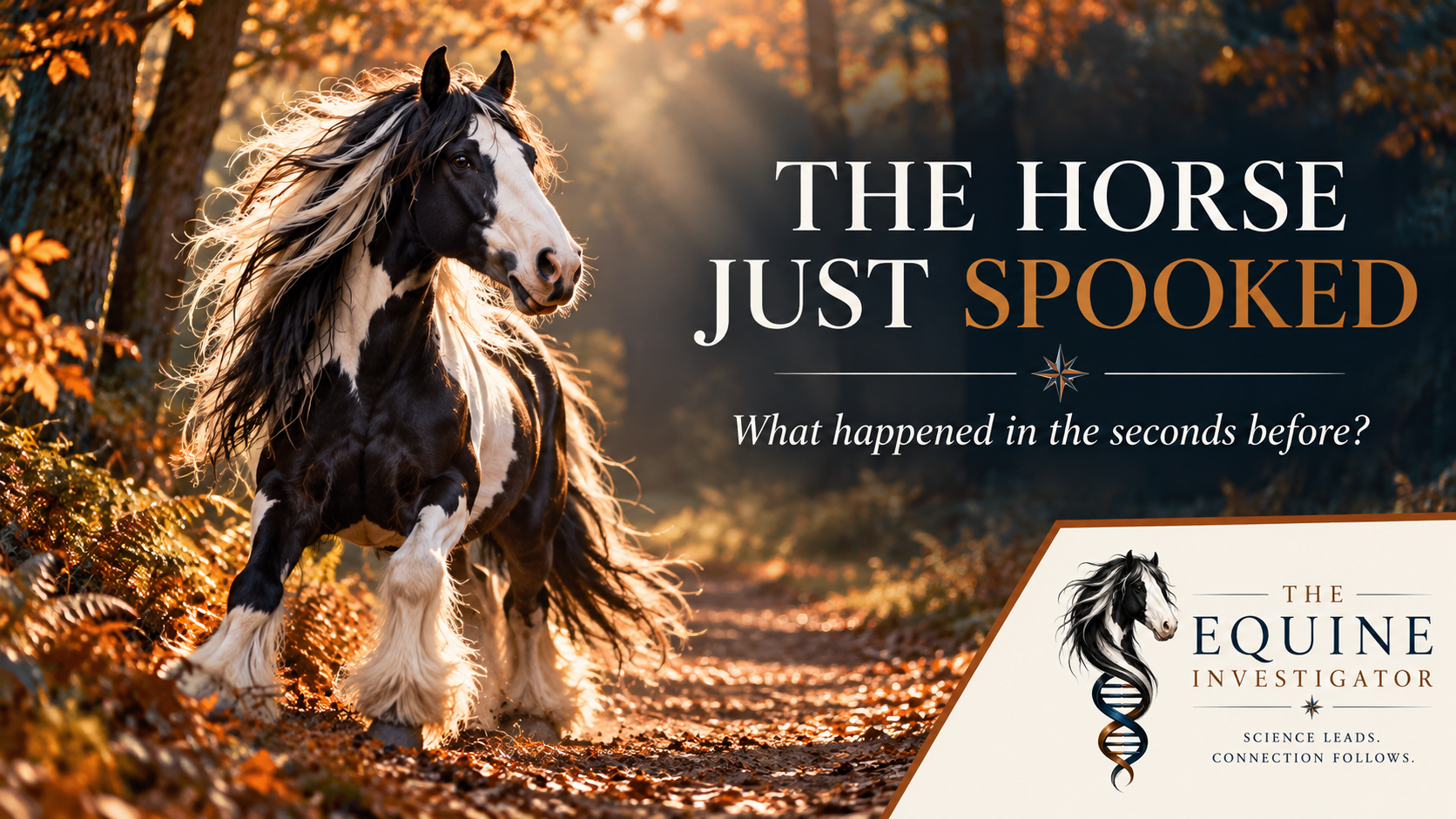
I recently heard a joke that made me laugh because every horse person knows the feeling: “The horse just spooked because a mouse started moving in the woods a mile away.”
Maybe it was the mouse. Maybe it was a branch shifting ten feet away. From the saddle, all we know for certain is that the horse moved. The cause is something we still have to figure out.
A horse jumps sideways on a familiar trail. The rider looks back and spots a feed bag near the fence. The explanation seems obvious: the horse spooked at the bag. But had the horse already shortened its stride? Did an ear turn toward the woods? Was the bag moving, or was something else happening nearby? After the jump, did the horse settle immediately, or did it remain focused farther down the trail?
As a forensic criminologist, I bring that same curiosity to a death investigation. The event everyone remembers is often the most dramatic moment. To understand it, I need to know what happened before, during, and after.
Before the spook, I want to know what was normal for that horse and what changed. Before a death, I want to understand the people, their relationships, their routines, and any events leading up to it. A reported argument or threat might matter, but I need to know who reported it, when it happened, and whether other evidence supports it.
During the spook, the rider may feel the horse leap without seeing what startled it. During a homicide, a witness may hear a sound, see someone arrive, or observe part of an encounter without seeing the killing. I separate what each person actually observed from what they concluded. Then I compare those accounts with the physical evidence and the timeline.
After the spook, I watch what the horse does next. Does it stop and look back? Try to leave again? Relax and continue? After a death, I ask who discovered the person, what they did, what they said, and what changed at the scene before investigators arrived. Those actions may matter. Their meaning still has to be tested against the circumstances.
The trap is settling on an explanation too early. “It was the feed bag” may be right. It may also be the first story we attached to the first thing we noticed. In a homicide investigation, a plausible story can feel convincing long before the evidence establishes it.
So I go back to the sequence. What happened before? What can we establish about the event itself? What happened after? And for every detail, how do we know?
The mouse in the woods might remain a joke. The questions it raises are serious. “The horse just spooked” tells us something happened. It doesn’t tell us why.