

Course Fee: $739/person includes materials and extra activities
This course is approved by the International Association for Identification for 40-hours credit hours towards crime scene certification and recertification.
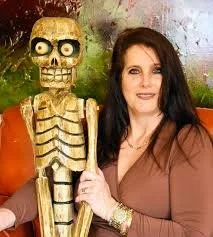
About Sharon Plotkin
Sharon has been a certified crime scene investigator since 2006 with the International Association for Identification and spent almost 21 years doing crime scene work in North Miami, Florida where she investigated thousands of cases ranging from burglaries to homicides and suspicious death cases.
Sharon has been teaching in higher education since 2003 and is currently full-time faculty at Miami Dade College in Crime Scene Technology since 2016.
Sharon obtained her Master of Science degree in Criminal Justice with a minor in Psychology from Florida International University. Sharon received her doctoral degree in Education specializing in Curriculum and Teaching from Northcentral University in 2022. She is a member of several forensic organizations including the International Association for Identification, International Association of Bloodstain Pattern Analysts and Goldcoast Forensics. She is a fellow with the American Academy of Forensic Science.
Sharon has received specialized training in various fields of crime scene investigations, including, bloodstain reconstruction, photography, crime scene reconstruction, fingerprinting, shoe wear casting and other various topics. She has traveled throughout the United States, Taiwan and the Caribbean attending and teaching at crime scene conferences that included experts such as Dr. Henry Lee, Dr. Michael Baden, Dr. Vincent DiMaio, Vernon Geberth, Dr. Bill Bass, Paul Kish, Richard Saferstein and other highly notable crime scene experts.
Sharon published a crime scene reconstruction textbook with author Robert Ogle Jr. and her second textbook in Fingerprinting was released in May 2021. She is working on a manuscript for a third textbook in crime scene safety.
Location: Crossroads Ranch, 3611 Austin Road, Monroe, NC 28112
When: March 23-27, 2026, 9am-5pm EST
Accommodations:
Airport: CLT Airport
Monroe, NC Hotels, please contact hotels for room rates:
The Holiday Inn Express
The Hampton Inn
Extra Seasonal Activities Planned:
Bonfire
BBQ
Animal interactions available on site
Fishing
Swimming
The Silent Witness: Crime Scene Investigation with Sharon Plotkin reveals how every crime scene tells a story — if you know how to listen. Evidence doesn’t lie; it speaks through bloodstains, fingerprints, trace materials, and scene dynamics. This course, led by Sharon Plotkin, guides participants through the essential principles and practices of professional crime scene investigation, from first response to courtroom presentation.
This 40-hour course is designed to instruct the proper methods and techniques to be applied when investigating and documenting crime scenes. Techniques that can be employed to identify and process and/or collect physical evidence at the scene will be covered.
The course is intended for crime scene technicians and investigators as well as patrol officers and detectives who are charged with the responsibility of processing crime scenes. University student and individuals seeking employment in the field of forensics are also welcomed to attend.
Day 1 - Documenting Crime Scenes
Documenting the crime scene with note taking, report writing, sketching and photography will be practiced. Crime scene search principles and patterns will be discussed.
Day 2 - Photography, Impression Evidence, Trace Evidence
Crime scene photography techniques are continued. Detection and collection of impression and trace evidence will be practiced. Packaging of evidence and chain-of-custody concerns will be discussed. The use of forensic light sources for the detection of trace evidence such as body fluids will be practiced.
Day 3 - Fingerprint Evidence
Mechanical and chemical processing of fingerprint evidence will be practiced. Topics include recognizing surfaces conducive to processing and recognition of appropriate processes to be used in various instances.
Day 4 - Intro to Bloodstain Reconstruction
Methods for the detection and enhancement of the visibility of latent bloodstains and documenting bloodstain evidence will be practiced.
Day 5 - Intro to Shooting Reconstruction, Toolmark Evidence, and Testimony
Documentation of bullet trajectories using lasers, rods, and string will be practiced. Casting toolmark impressions will be practiced. Testifying in court as to findings at the crime scene will be discussed.
Goals and Objectives
Upon completion of this workshop, the student will be able to describe the proper documentation of a crime scene to include:
Discussion of Photography
Lighting techniques that provide best results
Camera operations that provide focused, sharp, examination quality images
Demonstrate sample images taken during in-class exercises
Discussion of Sketching
Floorplan
Projection
Exploded View
Demonstrate sample sketch drawn during in-class exercises
Search Procedures
Describe at least three different search patterns, how they differ, and examples of situations where each works best
Evidence Collection
Demonstrate the ability to package different types of evidence during in-class exercises
Demonstrate the ability to complete a lab analysis sheet
Demonstrate the ability to complete a property receipt
Describe crime scene safety issues, listing at least three concerns of investigators at crime scenes
List personal protective equipment to be used at all scenes
List personal protective equipment to be used at critical scenes
Fingerprinting
Describe how to recognize surfaces conducive to fingerprints
Describe techniques for lifting identifiable fingerprints
Using standard fingerprint powder
Using magnetic fingerprint powder
Using fluorescent fingerprint powder
Using dye stains and other chemical processes
Bloodstain Pattern Recognition
Describe the difference between passive and active blood flow
Describe how directionality of bloodstains can be determined
Discuss how points of convergence can be determined
Detection and Enhancement of Blood on Crime Scenes
Discuss Bluestar Forensic and how it is properly applied and documented
Discuss how Amido Black is properly applied and documented
Use of alternate light sources to detect trace evidence and bodily fluids
Describe the mechanics of fluorescence
Discuss the use of forensic light sources to locate evidence including
Use of different wavelengths of light
Selecting the proper barrier filtration to optimize visibility of the evidence
List which colors of light tend to work best with each filter
Red
Yellow
Orange
Discuss shooting reconstruction (Bullet trajectory documentation)
Describe steps used to document the trajectory using a laser(s)
Describe steps used to document the trajectory using a rod(s)
Describe steps used to document the trajectory using a string
Describe how impression evidence is ideally documented
Describe special photographic techniques used to document the evidence
Describe casting techniques used to document and collect the evidence
Discuss precautions to be taken to safeguard casts
Court room procedures and testimony
Describe preparations to testify in courtroom proceedings
Discuss how the investigator can act as a teacher for the judge and jury
Describe proper demeanor for professionalism in court